
by David Jin
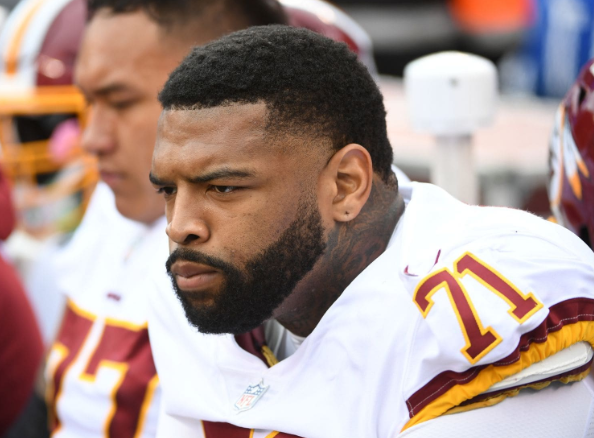
Trent Williams is a once-in-a-generation talent at left tackle. He is a do-everything, protect-everything lineman whose Swiss-Army knife skillset allows him to be a pass protector, a run-blocker, and a downfield blocker to help his receivers get a few more precious yards after the catch. He can take on foes in the cramped confines of the pocket and take them on in the wide expanse of the open field. His absence is glaring as he enters the final years of his contract amidst a mysterious holdout. As of Week 3 of the 2019 season, they rank 30th in run offense at 48 rushing yards per game, and 30th in yards per carry, with 2.8. While their pass protection has been mediocre to good, at 15th in total sacks and 10th in sack rate, QB Case Keenum looked rattled in the pocket in Week 3, throwing three interceptions to the Chicago Bears’ defense. This included a pick-six to Ha Ha Clinton-Dix (who would ever have thought they would be reading that sentence in 2016?). This came after throwing no interceptions through the first two games of the season.
Williams’s situation is not that of a greedy free agent looking to suck up more of his team’s cap space, though it seems he is unsatisfied with his current contract. It comes from a situation that I know all too well; one in which, honestly, unless some real heart-to-heart discussions happen, is unlikely to repair itself. Neither is Williams’s situation that of a Keyshawn Johnson livid with his coach’s play calling and lack of inclusion in the gameplan—no, Washington would love to have him back in the fold right now. Rather, his holdout stems from a lack of medical trust, arguably the most important trust that can exist between a player and a team.
Richard Sherman put it eloquently in his piece in The Players’ Tribune about why he detests Thursday Night Football. The rest and recovery schedule necessary for a player is completely shortened. To best ease this transition to a short week, the medical staff blends seamlessly in the background. With a situation as dangerous as playing without recovery, a player is one injury away from joining the annals of “Not For Long”. Williams’s health incident began with the discovery of a growth on his scalp, potentially life threatening if it were a malignant tumor. While it was benign in the end, he still had it removed. This episode, however, resulted in a breakdown of trust in the medical staff for reasons unknown, and as of Week 3 of 2019, Williams has remained silent on this.
Any of the potential reasons is cause for worry on the part of Washington. One possibility, speculated by head coach Jay Gruden, was that this diagnosis of the growth should have come sooner. Although I am not a fan of extending storylines and hypotheticals, there are several implicit lines of thinking that could have incensed Williams. His surgery was during the wintertime, February, which would have been after the season. It would have been troubling if, during a late 2018 skid that saw Washington fall from 6-3 to 7-9, the medical staff kept Williams waiting on a diagnosis on a tumor while trying to keep their playoff hopes alive, which were mathematically possible even going into Week 16 in an NFC East whose champion, Dallas, had only 10 wins, the lowest among any division champion in the NFC. These actions would have implied that because their star left tackle, one of the most important positions in football, needed to play for them so they could make the playoffs, they would be willing to deceive him on a potentially fatal medical condition. This short-sightedness, combined with a soon-expiring contract, would give a sense of expendability, and a willingness for an organization to lie to squeeze the most return out of a soon-departing player.
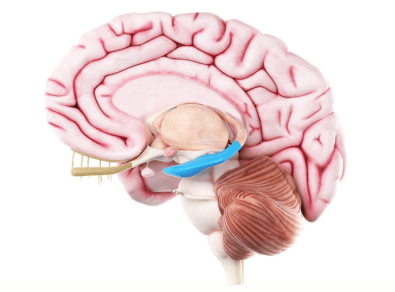
A second debacle could have arisen due to the often difficult nature of neurosurgical decisions—especially whether or not to conduct them. In neurosurgical operations, an enormous factor to be considered is the potential for long-term loss of function due to removal of crucial brain regions. The hippocampus, a small, seahorse-shaped region in either brain hemisphere responsible for the formation of new memories, should never be removed in both brain hemispheres. One of the most famous patients in neuroscience history, patient H.M., had both his hippocampi removed because doctors detected seizures originating from them; he was mostly unable to form new memories for the remaining 55 years of his life. Areas for language are also never removed, as the brain regions responsible for language production and comprehension are usually located in one brain hemisphere and not the other. Malignancy is another factor for surgery; if the growth will eventually spread, it should be contained. However, neurosurgery is a last resort, and patients with benign growths can, and do, end up perfectly fine without operation. A feuding medical staff, debating whether or not to operate on the growth, would not inspire any confidence that they could decide the best course of action.
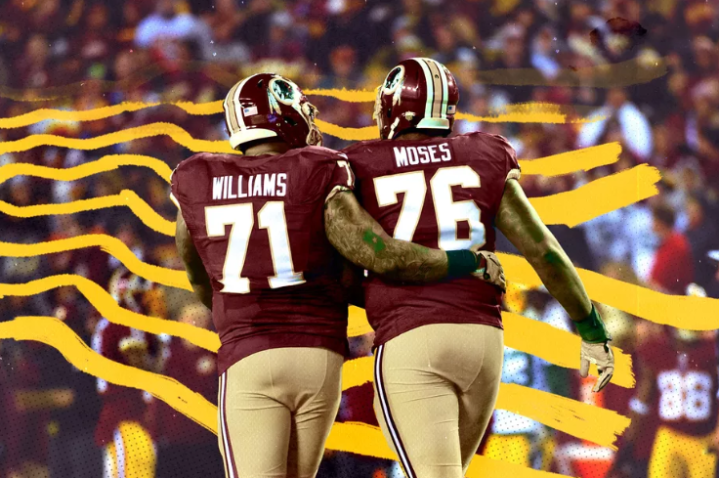
It is paramount that Washington does not let this type of mistrust continue, especially given its history of ruining players’ recoveries. However, it is not only the personnel teams of the players who should be quaking in their sneakers. Roger Goodell and his administrative cronies should also be quaking in their loafers. This type of medical mistrust starting at the top is not new, and Williams’s status as an elite player is helping to bring attention to the situation. Teammate Morgan Moses was grateful for Williams’s stand, saying, “It’s about time someone like that stands up…It’s not just a situation here; it happens throughout the league. To have one of our peers like Trent to stand up like that means a lot. His scare is one you never want to have, but you’ve got to take care of yourself.”
I, too, stand with Williams on this. Williams’s stand is an inspiration to me, being brave enough to take on a multi-billion dollar industry. During my undergraduate studies, my goal had been to pursue a double major. As an epileptic, I hoped that administrators in the second major would understand my condition and allow me leeway to complete assignments in case I had a seizure. However, grumblings within the major and among non-majors who had taken its classes about its health policies led me to reach out to a professor to discuss the potential accommodations I might need even before taking a single class. His response was dumbfounding: Talk to the school HR about time-and-a-half on exams (legally required by the Americans with Disabilities Act), and assignments are due when they are due, regardless of circumstance. I grew to have an instant mistrust of the department and how I could sustainably be one of its students. After finishing all of the requirements for my primary major, neuroscience (to whom I am eternally grateful for their compassionate care as a community), I saw myself staring down five classes to finish out my second major. I decided to take the minor and call it on trying to finish the major. I knew my health would only be worsened by playing a game of catch-up, a snowball of stress leading to more seizures. As a mediocre student of my second major, I did not have the clout Williams had in trying to change the policies of the department. I was done for as a student.
Silverback, thank you for your stand. May your team, and the game of football, be better for it.

 HEX Sports