
by Sam Olbur
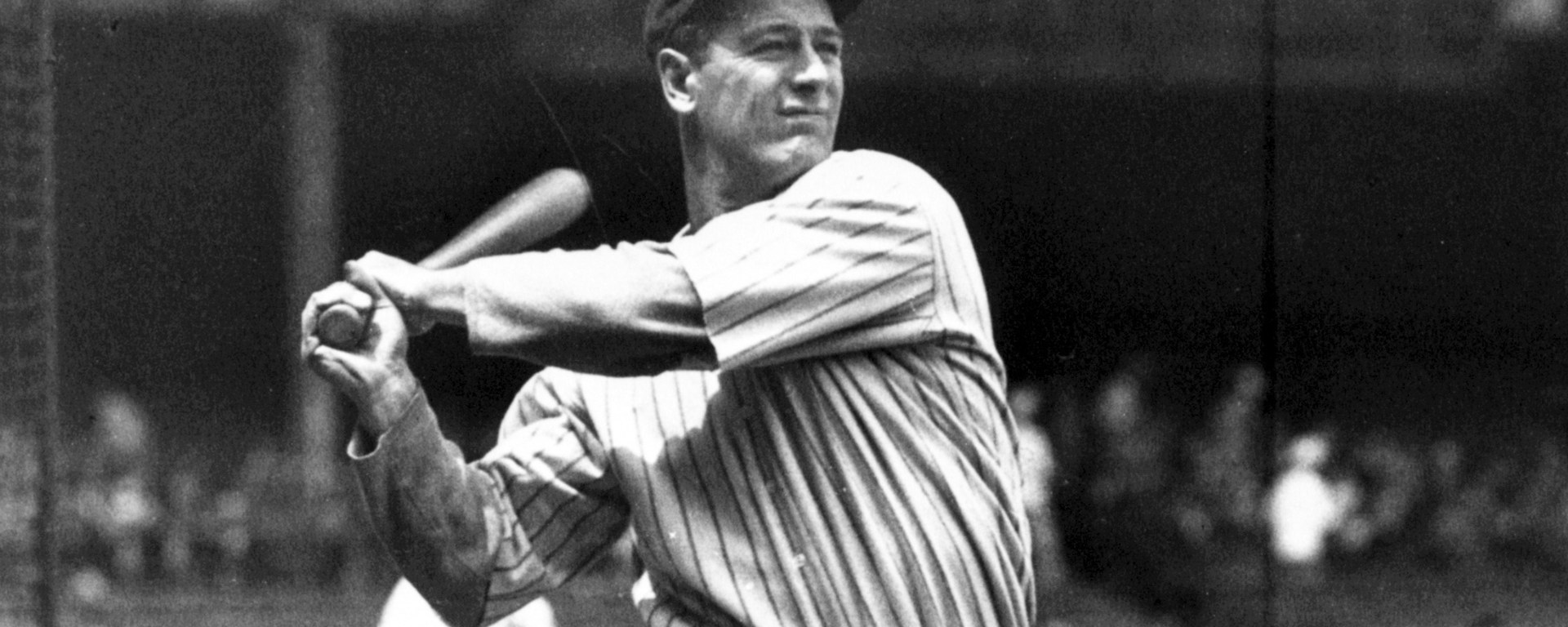
In 1934, Lou Gehrig led the Major Leagues in home runs (49), RBIs (166), Batting Average (.363), OBP (.465), Slugging (.706), and OPS (1.171). He finished FIFTH in MVP voting. Who finished first? Tigers catcher Mickey Cochrane batted .320 with TWO home runs and an .840 OPS. He was worth just four wins above replacement. Gehrig was worth 10.4! How could this happen? Baseball hadn’t evolved yet. The emphasis was not on OPS (on base plus slugging%) or WAR (wins above replacement). Instead, the emphasis was on team accomplishments. Don’t get me wrong, the team is the most important thing when it comes to MLB baseball, but that doesn’t mean it’s the right way to evaluate an individual player. Barry Bonds is the greatest statistical player in baseball history and he never won a World Series. The team aspect should merely be a tiebreaker in voting when two players are in a close race for a certain award. So, what statistics should you look at to define a player’s season? What matters, and what is deceiving?


The first stat I look at when evaluating a big leaguer in today’s game is WAR (wins above replacement). I think WAR gives you the best estimate of what a player’s total value is. It measures every aspect of the game. Offense, Defense, and base running for position players are all measured in dissecting a player’s WAR. ERA (earned run average), strikeouts, contact rate, FIP (fielding independent pitching), and WHIP (walks + hits per inning pitched) are used to calculate a pitcher’s WAR. If you look at the end of the season, the leaders in WAR are usually the best guys in the game. Sometimes, WAR can be deceiving when a player is a defensive liability. Daniel Murphy is a great example of this, because he’s worth -1.0 WAR, which is below replacement level. However, he is a huge asset on offense and that awful statistic comes from his horrific defense. The Cubs are able to marginally hide his poor defense with the constant shifting and maximize his offensive value by having him as the leadoff hitter. Therefore, for the Cubs, he isn’t worth -1.0 WAR. He’s worth much more than that. Overall, I still think WAR is an accurate representation of a player’s value in total. Although there will always be exceptions with every major advanced statistic, over the last 10 years, the MLB WAR leader has finished top 2 in MVP voting or Cy Young voting. Clearly, this stat has evolved into a crucial representation of a player’s overall value.


The next statistic I look at when evaluating a position player is wOBA (weighted on base average). wOBA is based on a simple concept: Not all hits are created equal. Batting average assumes that they are. On-base percentage does as well, but makes an improvement by including other ways of reaching base such as walking or being hit by a pitch. For example, if a player hits a double with nobody on base and 2 outs, is it more valuable than a single with second and third on base and 2 outs that scores 2 runs? No, of course not. Slugging % would say it is, but wOBA would say it isn’t. wOBA accurately evaluates each hit or walk and the context of how it happens. I think it is the best offensive statistic in baseball by far. Let’s use Albert Almora as a perfect example of how crucial advanced statistics are in today’s game (yes, I’m a Cubs fan). Almora is hitting a very respectable and above league average .283. He’s having a good year on offense, right? Not so fast. He’s slugging a measly .321 and his wOBA is just .303 (league average is around .320). In every advanced statistic Almora grades out poorly, but many fans are deceived by his batting average and think he’s a quality major league hitter. Of course, batting average does have some value. High contact rates are usually associated with a decent batting average and Almora does have a high contact rate. In certain situations (a runner on third, less than 2 outs), that type of skill set can be very valuable. However, throughout the course of a 162 game season, I find wOBA to be the best metric to evaluate and offensive season.
When evaluating advanced statistics for pitchers, there’s one main objective to look for: Are they lucky or unlucky? This is determined by their ERA (earned run average) and their FIP (fielding independent pitching). If a pitcher has an ERA of 3.25, but their FIP is 4.50, it means they have been lucky. FIP measures the true outcome of a batted ball in play without measuring the type of defense behind the pitcher. For example, if a pitcher goes 7 innings and gives up 1 run, his ERA may look great, but if in that same outing he was giving up a lot of hard contact and was just fortunate that the ball was hit at his defense, FIP would take that into account. The purpose of this stat is to get an accurate representation of how the pitcher is throwing the ball. It goes both ways. A pitcher could have an ERA of 4.75, but a solid FIP of 3.50. That means that over time, he’s due for some good luck, and the weak contact he’s letting up should eventually turn into more outs than he’s currently getting.
Baseball is a game of luck and unpredictability. The benefit of advanced statistics is they give the informed fan the best possible breakdown of how a player is performing and how the fan can estimate how the player will perform going forward. In addition, advanced statistics give a much more detailed and accurate representation of a player’s total body of work. Up until just recently, a fan looked at batting average, home runs, and RBI to define an offensive season. Those three statistics hold value, but they don’t tell the whole story. Digging into advanced stats paints an entire picture about a player’s season. Of course, each stat holds different value for each player because of their strengths and weaknesses. A second baseman whose job for his team is to hit for contact and average will have a worse OPS and wOBA than an outfield slugger. Each stat needs to be taken with a grain of salt. However, the totality of the advanced statistics still provides fans with a more educated and accurate way to evaluate a baseball player. The game of baseball is evolving statically, and I challenge baseball fans to evolve with it.
*All stats obtained from FanGraphs and Baseball Reference
 HEX Sports